
Court and Process
Surrey Provincial Court Family Law: What to Expect at Your First Appearance
Shergill Law Corporation14 October 20266 min read
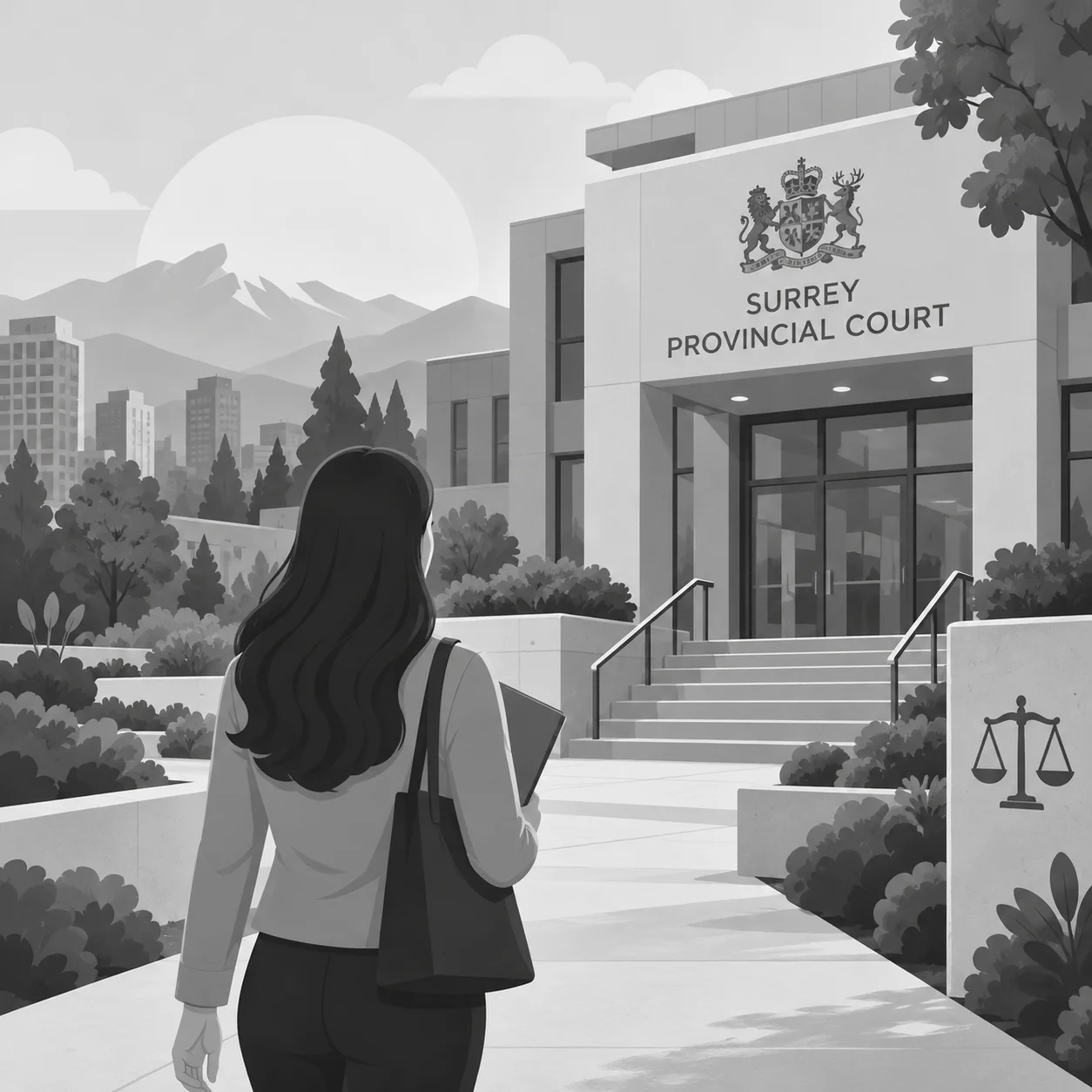
If your family law matter is headed to Surrey Provincial Court, the process is more structured, and more navigable, than it first appears. Provincial Court handles most parenting, support, and protection order matters in BC, and knowing what happens at each stage, from filing to your first appearance, makes the difference between walking in prepared and walking in guessing. Here’s how it actually works, and how Shergill Law helps Surrey clients through it.
What goes to Provincial Court versus Supreme Court
BC has two courts that hear family law matters, and which one applies depends on what you’re asking for. Provincial Court can deal with parenting arrangements, child support, spousal support, and protection orders, but it cannot divide property, debt, or grant a divorce, those matters go to the Supreme Court of British Columbia. Many separating couples in Surrey end up using both, Provincial Court for the parenting and support pieces, Supreme Court for property division or the divorce itself, depending on what needs to be resolved and whether an agreement already covers part of it.
If you’re not sure which court your situation belongs in, that’s one of the first things worth confirming before you file anything, since starting in the wrong court costs time you don’t get back.
Starting a case at the Surrey courthouse
A Provincial Court family case begins with an Application About a Family Law Matter, filed at the Surrey Law Courts registry. The other party is served with the application and has a chance to respond. From there, the court typically schedules a Family Case Conference before any contested hearing, a required step under BC’s Provincial Court Family Rules that gives both sides a chance to narrow the issues, and often resolve some or all of them, in front of a judge before things escalate further.
This structure exists specifically to reduce the number of cases that need a full hearing, which lines up with how BC’s Family Law Act generally favours resolving family disputes out of court where it’s safe and appropriate to do so.
What a Family Case Conference actually involves
A Family Case Conference is informal compared to a trial, there’s no evidence presented and no formal testimony, it’s a conversation in front of a judge aimed at identifying what you actually agree on, what you don’t, and whether a short-term arrangement can hold things together while the rest gets sorted out. Judges at this stage often ask pointed questions about what each person actually wants, and it’s common to leave with an interim order covering parenting time or support while the larger issues continue.
Showing up prepared matters here. Bringing a clear, specific proposal, not just a list of complaints about the other party, tends to move things forward faster and reflects better on how the rest of the case is likely to go.
If the matter doesn’t resolve at the case conference
When issues remain after the case conference, the file moves toward further steps, which might include a Family Settlement Conference, a Judicial Case Conference, or ultimately a trial, depending on what’s outstanding and how contested it is. Every one of these stages is also an opportunity to settle, most family law matters in BC resolve before trial, whether through direct negotiation, a settlement conference, or mediation running in parallel with the court process.
If safety is a concern at any point in this process, that changes how the matter should be handled procedurally, and protection order applications follow their own, faster track rather than waiting for a regular case conference date.
What to bring and how to prepare
Court staff at the Surrey registry can tell you about forms and filing procedures, but they cannot give legal advice about your specific situation, that’s an important distinction self-represented litigants often run into partway through a case. Before any appearance, it generally helps to have organized a clear timeline of events since separation, financial disclosure documents if support or property is at issue, and a specific, realistic proposal for what you’re asking the court to order, rather than an open-ended request. Judges respond better to specifics than to general grievances about the other party.
How Shergill Law supports clients through the Surrey Provincial Court process
Shergill Law Corporation represents clients at the Surrey Law Courts registry on parenting, support, and protection order matters, and prepares the Family Case Conference proposals, financial disclosure, and court materials that go with them. The firm also offers mediation alongside traditional litigation, so a matter already in the court system can still be resolved through negotiation where that remains realistic, rather than defaulting to a full hearing. Mandy Shergill and the team work with clients to figure out which track, mediation, settlement, or a contested hearing, actually fits the situation, rather than assuming one path from the outset.
As with any family law matter, how a specific case unfolds depends on its facts, and nothing here is a guarantee of a particular result at any stage of the court process.
Frequently Asked Questions
Do I need a lawyer to go to Surrey Provincial Court for a family matter?
No, you’re allowed to represent yourself, and many people do. Court registry staff can explain forms and procedure but cannot advise on your specific case, which is the main reason people choose to have a lawyer involved, particularly once a matter is contested.
What’s the difference between Provincial Court and Supreme Court for family law in BC?
Provincial Court handles parenting arrangements, child and spousal support, and protection orders. It cannot grant a divorce or divide property or debt, those require the Supreme Court of British Columbia. Some cases involve both courts at once.
What happens at a Family Case Conference?
It’s an informal meeting with a judge, without evidence or formal testimony, aimed at narrowing the issues and seeing what can be resolved early. It’s a required step before most contested Provincial Court family hearings and often results in an interim order on at least some issues.
Can a case still settle after it’s already in the court system?
Yes. Most family law matters in BC settle before trial, whether through direct negotiation, a settlement conference, or mediation running alongside the court process. Being in the court system doesn’t rule out resolving things outside of a trial.
This article provides general information about family law in British Columbia and is not legal advice. Every situation is different, speak with a family lawyer about your specific circumstances.