
BC Family Law Updates
What Happens to a Spousal Sponsorship Application If You Separate Before Immigration Is Finalized
Shergill Law Corporation7 September 20267 min read
If you separate while a spousal sponsorship application is still in progress, the application does not automatically end, but it can become more complicated on both the immigration side and the family law side. What happens next depends on whether your spouse has permanent residence yet, whether Immigration, Refugees and Citizenship Canada (IRCC) still considers the relationship genuine, and how you and your spouse handle the separation itself.
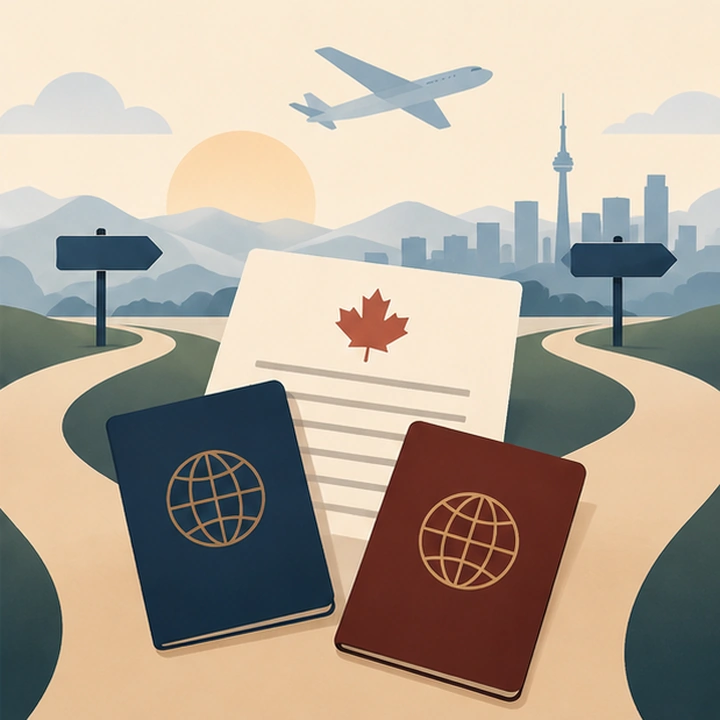
Shergill Law Corporation is a family law firm, and the immigration consequences of a separation fall under federal immigration law, not British Columbia family law. This article explains how the two systems intersect so you understand what is at stake, and when you need to involve an immigration lawyer or a Regulated Canadian Immigration Consultant (RCIC) alongside your family lawyer.
Does Separating Affect an In-Progress Sponsorship Application?
Spousal and common-law sponsorship under the Immigration and Refugee Protection Act requires IRCC to be satisfied that the relationship is genuine and was not entered into primarily to gain status in Canada. A separation while the application is still being processed can prompt IRCC to re-examine whether the relationship was genuine at the time it was assessed, particularly if the separation happens shortly after the application was filed or shortly after permanent residence is granted.
- Before a decision is made: you generally have a legal duty to update IRCC if your relationship has ended, since the sponsorship is based on an existing spousal or common-law relationship.
- After permanent residence is granted: permanent residence generally is not revoked simply because a couple later separates for genuine reasons, but misrepresentation concerns can arise if IRCC believes the relationship was never genuine.
- Conditional permanent residence: Canada removed the conditional permanent residence requirement for sponsored spouses in 2017, so most sponsored spouses are not required to stay in the relationship for a fixed period after landing.
Because the rules turn on timing and on the facts of your specific relationship, this is a question for a licensed immigration lawyer or RCIC, not a family lawyer. What a family lawyer can help with is the separation itself: dividing property, addressing parenting arrangements if you have children, and documenting the separation properly.
The Sponsorship Undertaking and Family Law Support Obligations
When a sponsor signs an undertaking with IRCC, they commit to supporting their sponsored spouse financially for a set period (generally three years in BC for a spousal sponsorship) so the sponsored person does not need to rely on government income assistance. This undertaking is a federal immigration commitment and is separate from spousal support under BC's Family Law Act, though the two can overlap in practice.
A separation does not cancel the sponsorship undertaking. At the same time, a sponsored spouse may also be entitled to spousal support under BC family law depending on the length of the relationship, the roles each spouse played, and the financial circumstances of both people. A recently sponsored spouse who gave up work, family, or community ties to move to Canada is a factor courts and mediators can weigh when support is being discussed.
Why Documentation Matters More in These Situations
Separations that intersect with an immigration process tend to move faster and carry higher stakes than a typical separation, because a sponsored spouse's status, income assistance eligibility, and ability to stay in Canada can all be affected by how the separation is handled and documented. A clearly drafted separation agreement that sets out the date of separation, parenting arrangements, and any support being paid can matter for both the family law file and, where relevant, for the immigration file.
This is also an area where cultural pressure can complicate things. In many South Asian families, there is pressure to keep a separation private or to delay formalizing it out of concern for extended family or community reaction. Waiting to document a separation properly rarely helps either side and can make both the family law and immigration pictures less clear later on.
Practical Steps If You Are in This Situation
- Speak with a family lawyer about your separation date, parenting arrangements if you have children, and property division under BC law.
- Speak with a licensed immigration lawyer or RCIC about your specific sponsorship file, including whether and how to notify IRCC.
- Put the separation in writing through a separation agreement once you have a clear picture of both the family law and immigration issues.
- Keep records: communications, financial contributions, and the actual date you began living separate and apart, even if you remain under the same roof.
A note on bilingual support: Many of the families we work with at Shergill Law Corporation are navigating separation and sponsorship in English as a second language. Mandy Shergill and our team can meet with you in English, Punjabi, or Hindi to make sure nothing is lost in translation at a stressful time.
Frequently asked questions
Can IRCC refuse or revoke a spousal sponsorship if we separate?
It depends on timing and the facts. A separation before a decision is made can affect whether IRCC considers the relationship genuine, while a separation after permanent residence is granted generally does not undo status on its own unless misrepresentation is involved. This is a question for an immigration lawyer or RCIC familiar with your specific file.
Do I still have to financially support my spouse if I signed a sponsorship undertaking and we separate?
The sponsorship undertaking is a commitment to the federal government and is not automatically cancelled by separation. Spousal support under BC's Family Law Act is a separate question that depends on the length of the relationship and each spouse's circumstances. The two obligations can run alongside each other.
Should I get a separation agreement if we are going through an immigration process?
Generally yes. A written separation agreement that records your separation date and how you are handling parenting and finances creates clarity for the family law side of your situation, which can be useful context if immigration questions come up.
Do I need both a family lawyer and an immigration lawyer?
In most cases, yes. A family lawyer can advise on separation, parenting arrangements, and property division under BC law. An immigration lawyer or RCIC is needed for anything involving your or your spouse's status, since that falls under federal law outside a family lawyer's scope of practice.
This article provides general information about British Columbia law for educational purposes only and does not constitute legal advice. Laws change and every family's circumstances are different. Please contact Shergill Law Corporation or another qualified lawyer for advice about your specific situation before acting on anything you read here.