
Property and Debt
Dowry, Wedding Gifts, and Family Contributions: How BC Property Law Treats Them in a Divorce
Shergill Law Corporation12 September 20268 min read
In most cases, a gift given specifically to one spouse, such as dowry, jewellery, or cash given to a son or daughter by their own parents, is treated as that spouse's excluded property under BC's Family Law Act and is not automatically split with the other spouse at separation. But that answer gets complicated quickly once gifts are deposited into a joint account, used toward a shared home, or impossible to trace back to a single source.
How the Family Law Act Treats Gifts and Inheritances
Under section 85 of the Family Law Act, property a spouse brought into the relationship, along with gifts and inheritances received by one spouse during the relationship, is generally excluded from family property and is not divided equally. This can include:
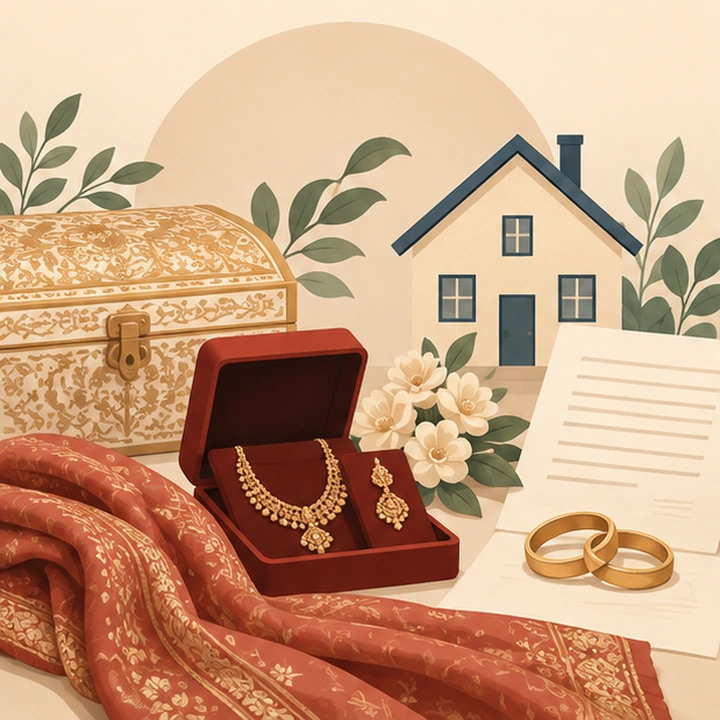
- Gold or jewellery given to one spouse by their own family, including traditional dowry or wedding gifts
- Cash gifts from a spouse's parents
- Property or funds inherited by one spouse
What is not automatically excluded is the growth in value of that gifted or inherited property during the relationship. If excluded property increases in value while the couple is together, that increase is normally shared, even though the original gift stays with the spouse who received it.
Where This Gets Complicated: Commingling and Tracing
The exclusion only holds up if you can show, with evidence, where the money or property came from and that it stayed reasonably separate from shared family property. This is often called "tracing." Problems come up when:
- Dowry jewellery is sold and the cash is deposited into a joint bank account
- Wedding gift money from both sides of the family is pooled into one account used to run the household
- A cash gift from one spouse's parents is put toward a house down payment that both spouses are on title for
- Gifts were given informally, in cash, with no record of who gave what or when
In these situations, a court or mediator looks at the paper trail: bank records, receipts, gift letters, or witness evidence about who gifts were given to and for what purpose. Without that evidence, it can be very difficult to prove an asset should still be treated as excluded, and it may end up being divided as family property instead. See our related guide on dividing property in a BC divorce and what counts as excluded assets for more detail on how this works generally.
When Both Families Contribute to a Home Purchase
It is common in South Asian families for both sets of parents to contribute toward a couple's first home, sometimes as an outright gift and sometimes with an informal expectation of repayment. If this isn't documented clearly at the time, it can become a genuine dispute years later about whether the money was a gift to one spouse, a gift to the couple jointly, or a loan. Getting a short written record at the time funds are given, even a simple signed letter confirming who the gift was from and who it was intended for, can prevent a much more difficult argument at separation.
What the Court Can Still Do: Significant Unfairness
Even where property is properly excluded, BC courts have the ability to depart from the usual division where an equal split, or treating something as fully excluded, would be significantly unfair given the specific facts of the relationship. This is a high bar and is not applied often, but it means the "excluded property" label is not always the end of the conversation. Our article on challenging a 50/50 property split on grounds of significant unfairness covers this in more depth.
Protecting Yourself Going Forward
- Keep dowry, jewellery, and family gifts in a separate account or safety deposit box where possible rather than mixing them into joint finances.
- Ask for a short written note or gift letter whenever a parent or family member gives a significant cash gift, confirming who it was given to.
- Keep receipts and records for jewellery, including appraisals, where available.
- If you are receiving a substantial gift or expect one before or during marriage, a marriage or cohabitation agreement can set out in advance how gifted property will be treated.
Why this comes up so often in Surrey: Dowry and large wedding gifts are a routine part of many Punjabi and South Asian weddings, but BC property law was not written with these customs specifically in mind. Getting advice early, ideally before a dispute arises, makes these assets far easier to protect.
Frequently asked questions
Is dowry considered marital property in BC?
Generally no. Dowry given specifically to one spouse is treated as that spouse's excluded property under the Family Law Act, as long as it can be clearly traced back to that spouse and was not mixed into shared family finances.
Can my spouse claim half of jewellery my parents gave me?
If the jewellery was given specifically to you and you can show that with evidence, it is typically excluded property. If it was sold and the proceeds were mixed into joint accounts or used for shared purchases, it becomes much harder to protect and may be treated as family property.
What if my in-laws contributed to our house down payment?
It depends on whether the contribution was documented as a gift to one spouse, a gift to the couple, or a loan. Without clear documentation at the time, this is a common and genuinely difficult dispute, and a court will look at the surrounding evidence to decide how to treat it.
Does the increase in value of gifted property get split too?
Often yes. The original gifted property usually stays excluded, but the growth in its value during the relationship is generally treated as family property and divided between spouses.
This article provides general information about British Columbia law for educational purposes only and does not constitute legal advice. Laws change and every family's circumstances are different. Please contact Shergill Law Corporation or another qualified lawyer for advice about your specific situation before acting on anything you read here.